Investigator Truth

Belief Vs Investigation

If every blinking light, flashlight response, or cold chill is immediately labeled a ghost, the investigation does not become stronger. It stops before it begins.

Series Index Investigation Methodology
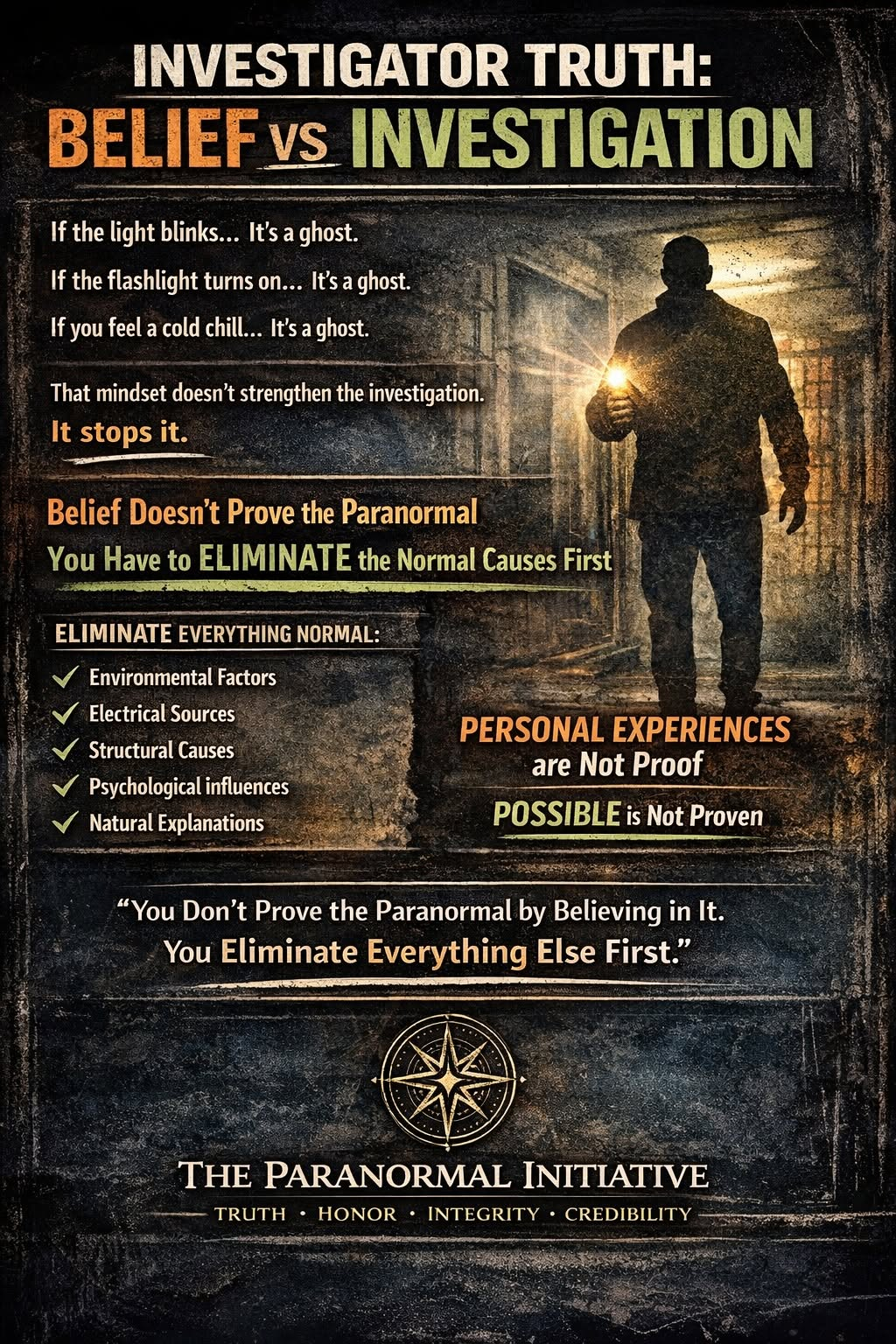
Investigator truth belief versus investigation graphic

When Belief Replaces Investigation

If you go into this field believing everything is a ghost, you will never elevate yourself as an investigator.

If the light blinks, it is a ghost. If the flashlight turns on, it is a ghost. If you feel a cold chill, it is a ghost.

That mindset does not strengthen the investigation. It stops it.

At that point, you are no longer investigating. You are confirming what you already believe.

Rule Out The Normal First

The only way to properly investigate the paranormal is to rule out everything normal first.

That means considering environmental factors, electrical sources, structural causes, psychological influences, and natural explanations.

The goal is not to dismiss the claim. The goal is to understand it well enough to know what can and cannot be explained.

Possible Is Not Proven

Only after normal causes have been carefully reviewed can an investigator begin using language such as possible or plausible.

Not proven. Not confirmed. Possible.

That distinction matters because responsible investigation does not claim more than the evidence supports.

Where The Field Struggles

Belief systems have a way of turning assumptions into facts, even when there is no evidence to support them.

Personal experiences matter. They can be meaningful, emotional, and important to the person who experienced them.

But they are still personal experiences. They are not proof of the paranormal by themselves. They are an individual's perception of what they believe happened.

How The Field Grows

If the field is going to grow, investigators have to stop labeling everything as paranormal and start learning how to investigate it properly.

That means slowing down, documenting context, testing normal explanations, and being willing to say that something is unresolved instead of forcing a conclusion.

Investigator Truth

You do not prove the paranormal by believing in it.

You approach it by eliminating everything else first.

That is not skepticism for the sake of dismissal. It is discipline for the sake of truth.

Standards & Ethics Back to Series Personal Experiences