EVP / ITC Experimentation · 01

EVP Basics

What EVP sessions attempt to document, why controls matter, and why unusual audio should be reviewed carefully.

EVP / ITC Experimentation Hub
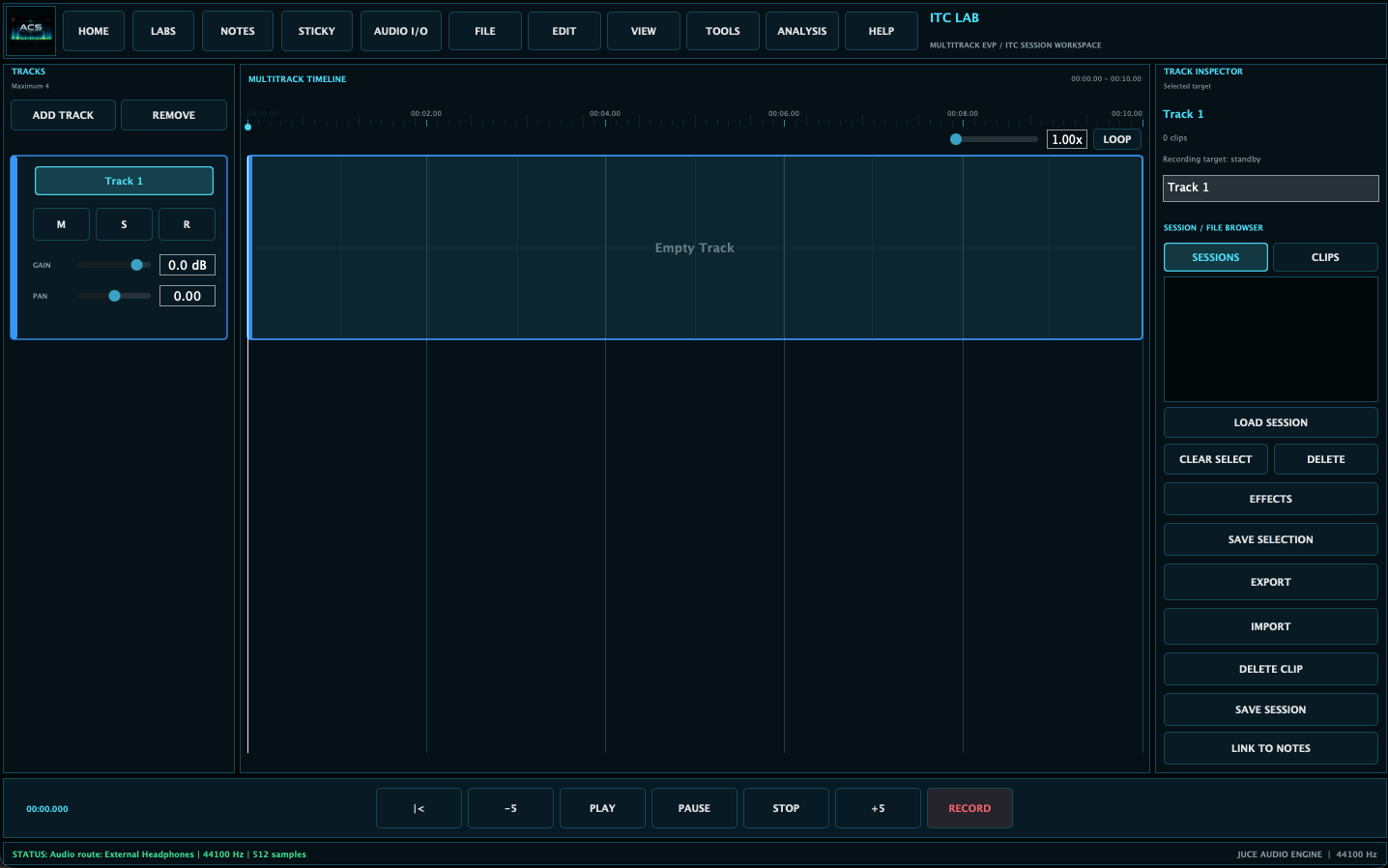
ACS ITC Lab multitrack workspace
ITC Lab is the capture and experimentation bench: recordings, generated material, markers, and review notes belong in the same documented workspace.
Capture contextRecord the room, people present, device settings, time, question, and environmental conditions before interpreting audio.
Preserve originalsKeep raw recordings untouched. Work from copies when filtering, trimming, or preparing review samples.
Review carefullyA voice-like sound is a candidate, not a conclusion. Check noise, movement, speech bleed, and expectation before describing it.

Lesson Reading

What EVP Means

Electronic Voice Phenomena research studies voice-like sounds or speech-like structures that appear on recordings without an identified ordinary source. EVP work does not begin with proof language. It begins with documentation: what was recorded, under what conditions, with what equipment, and what possible sources were present.

A Responsible Session

A responsible EVP session has a defined start time, clear location notes, known participants, quiet control periods, spoken markers when anyone moves or makes noise, and a review copy that can be compared to the original. The stronger the documentation, the easier it is to separate an interesting candidate from contamination.

What To Avoid

Avoid calling a sound a spirit voice because it feels meaningful. Avoid telling listeners what to hear before they review the clip. Avoid over-filtering until the original character of the recording is lost. The honest phrase is often: a voice-like audio candidate was captured and remains under review.

All Lessons Back to EVP / ITC Experimentation ITC Basics