Investigator Development Series

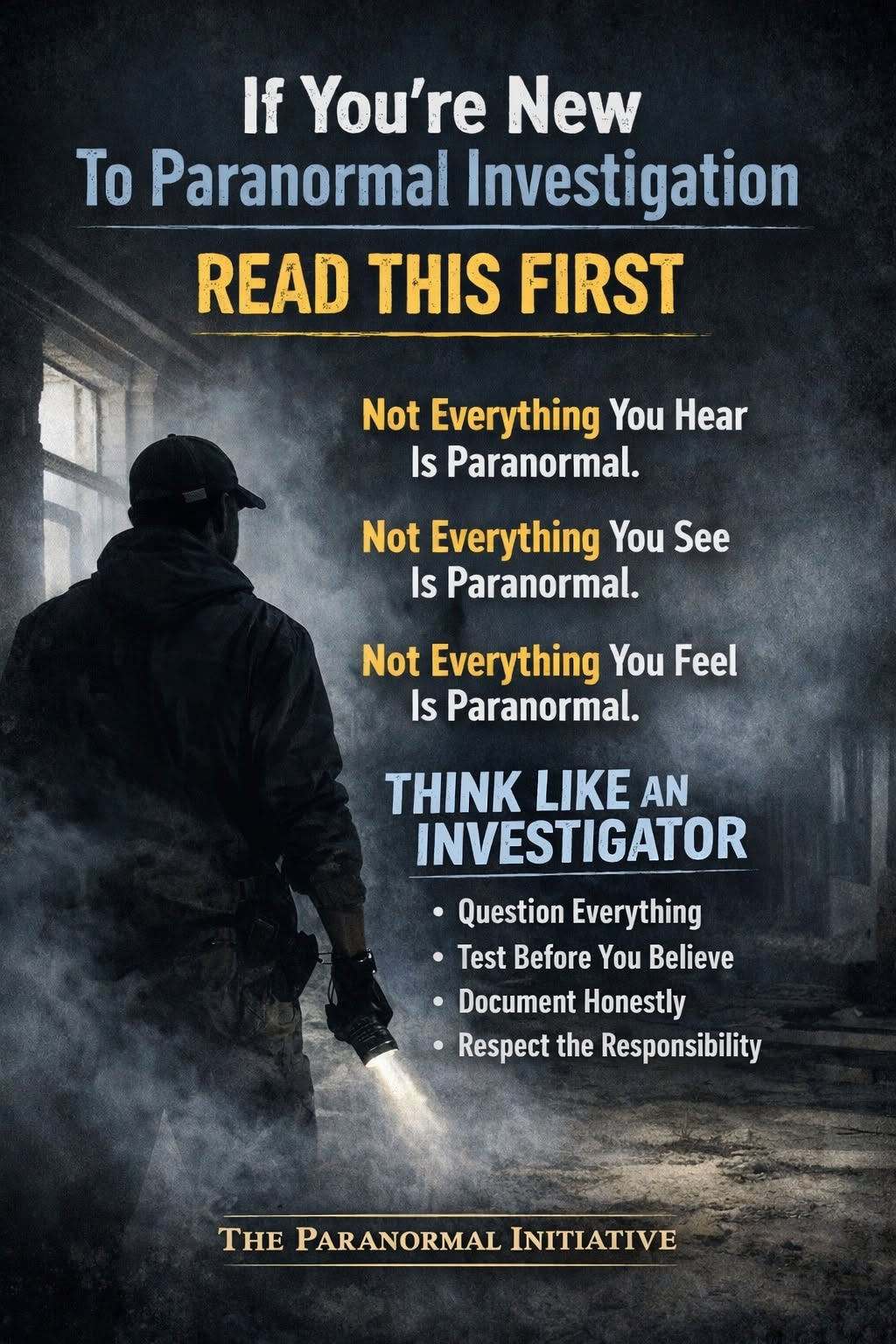
If You're New To Paranormal Investigation, Read This First

The first lesson for a new investigator is not about equipment, ghost hunting, or finding evidence. It is about learning how to think.

Series Index Ghostology 101
If you are new to paranormal investigation read this first graphic

Learn How To Think

If I could sit down with someone just getting into this field and give them honest advice, it would not be about equipment. It would not be about ghost hunting. It would not even be about finding evidence.

It would be about how to think, because that is what separates an investigator from someone who is just chasing experiences.

Not Everything Is Paranormal

The first thing to understand is this: not everything you experience is paranormal. That is not a negative thing. That is where real investigation begins.

You are going to hear things. You are going to see things. You are going to feel things. Some of it will be explainable. Some of it will be misinterpreted. Some of it will be influenced by expectation. Some of it may remain unexplained.

Your job is not to jump to conclusions. Your job is to slow down, question carefully, document honestly, and understand the environment before trying to understand the unknown.

Investigate Properly

This field does not need more people trying to prove the paranormal. It needs more people willing to investigate it properly.

That means learning how to separate a claim from evidence, recognize environmental factors, control contamination, document accurately, and say "I don't know" without forcing an answer.

People Are Trusting You

There is something else new investigators need to understand: people are trusting you.

When someone invites you into their home, they are often scared, confused, or overwhelmed. They are looking for answers, and what you say to them matters.

If you tell them their home is haunted without evidence, you may increase their fear. If you reinforce something that has not been properly tested, you may make their situation worse.

Responsibility Requires Honesty

This is not just investigation. It is responsibility, and that responsibility requires honesty.

Not everything is paranormal. Not everything needs to be labeled. Sometimes the most professional answer you can give is: "We don't have enough evidence to support that."

Tools Do Not Make The Investigator

If you want to get into this field the right way, focus less on the tools and more on the process.

Tools do not make you an investigator. Discipline does. Patience does. Critical thinking does. Most of all, integrity does.

If you can hold onto that, you will not just be part of the field. You will help improve it.

Education Center Back to Series Next Lesson