Foundational Terms
Core paranormal vocabulary, investigation language, common claims, evidence categories, and responsible use of field terminology.
Education Center
Foundational reading from The Paranormal Initiative Education Series: Ghostology 101. This section adapts that material into readable reference pages for investigators, researchers, explorers, and curious readers seeking grounded context in the paranormal field.
Future access may expand into the full Ghostology 101 system as that develops. For now, this area is a readable education reference for the public website, with no slide decks attached.
Ghostology 101 introduces new investigators and curious readers to paranormal research with disciplined curiosity, careful documentation, environmental awareness, client care, and ethical restraint.
Click a lesson graphic to open the full readable lesson page. These are public website lessons from The Paranormal Initiative Education Series, using the separate 101 website image set.
 01
01
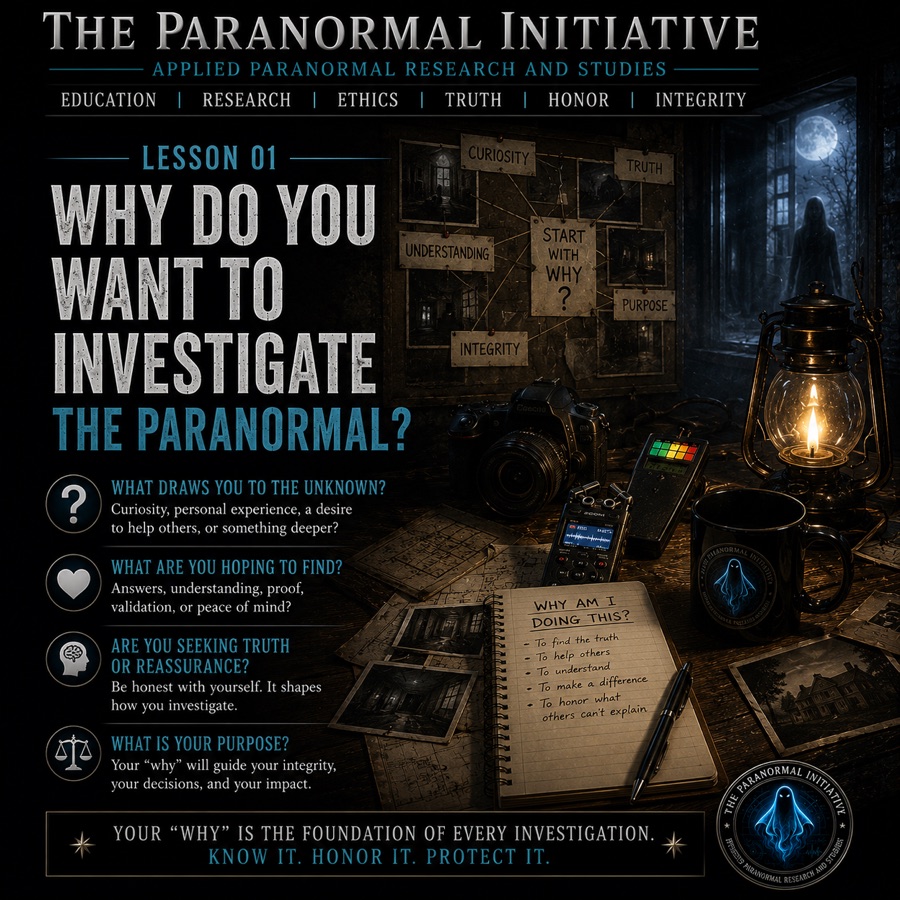
This opening 101 lesson begins with motive. Students examine whether they are drawn by personal experience, curiosity, fear, grief, survival questions, social media, history, mystery, or a desire to help people. The purpose is not to judge the reason. The purpose is to show that motive affects attention, interpretation, patience, and honesty in the field.
Open Lesson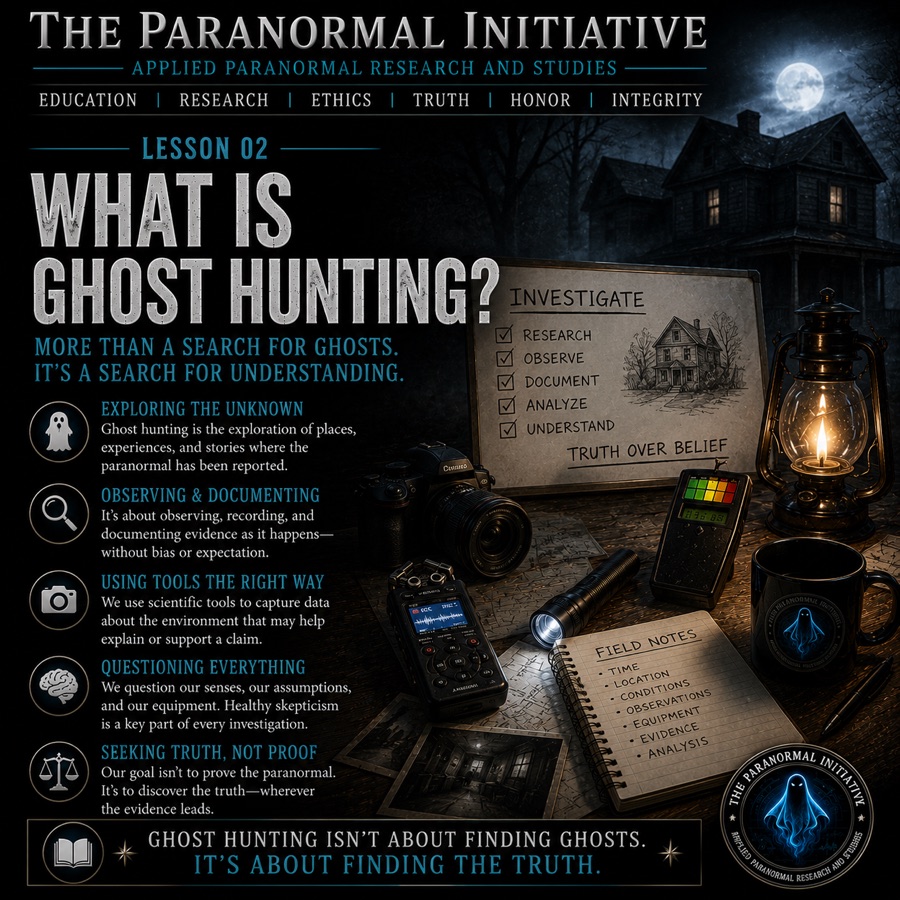 02
02
This lesson defines ghost hunting as the approachable doorway into the subject: visiting places connected to ghost stories, looking for unusual experiences, and trying to understand claims of hauntings. It also explains the limits of casual ghost hunting and why excitement alone is not investigation.
Open Lesson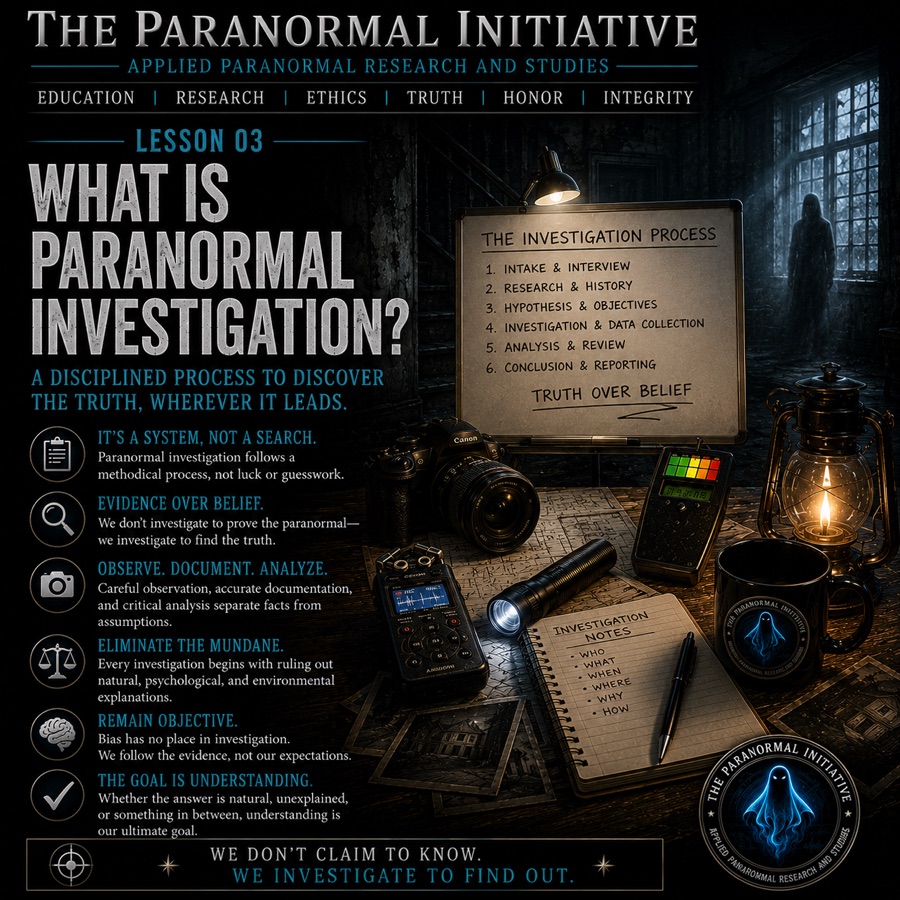 03
03
This lesson separates paranormal investigation from casual searching. Investigation requires permission, planning, documentation, baseline awareness, careful questioning, environmental review, evidence handling, and restraint in conclusions.
Open Lesson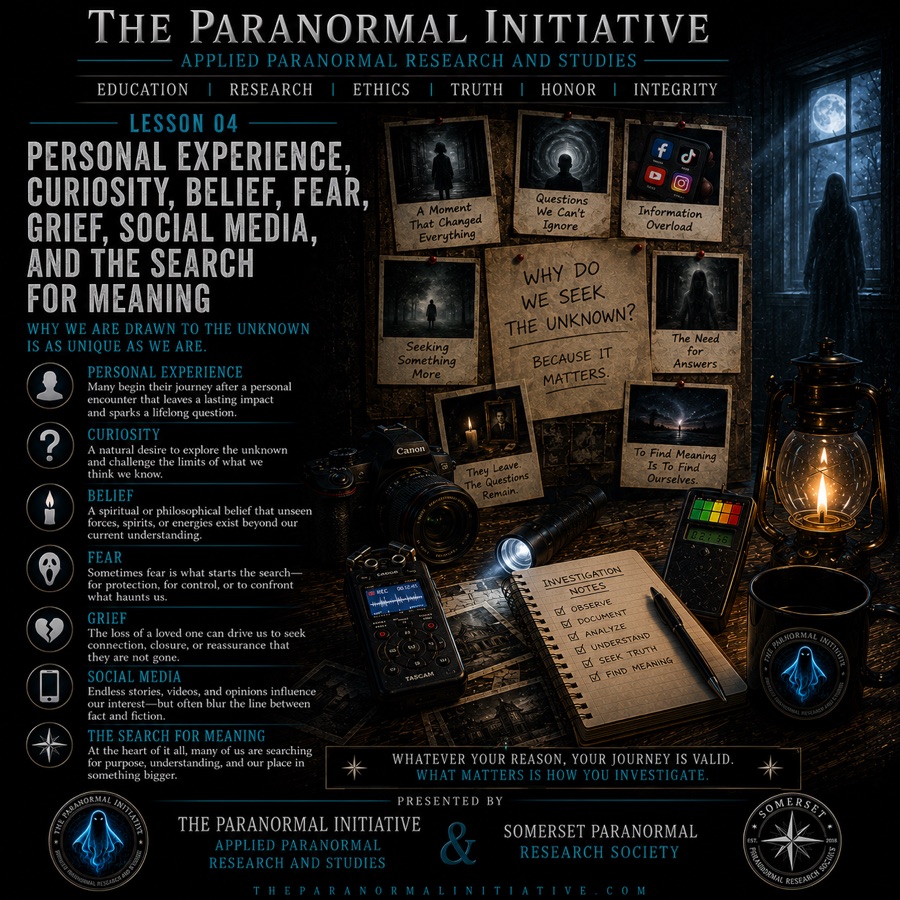 04
04
This lesson explores the human reasons people enter the field. It helps students understand how experience, belief, fear, loss, attention, and meaning-making can shape both witnesses and investigators.
Open Lesson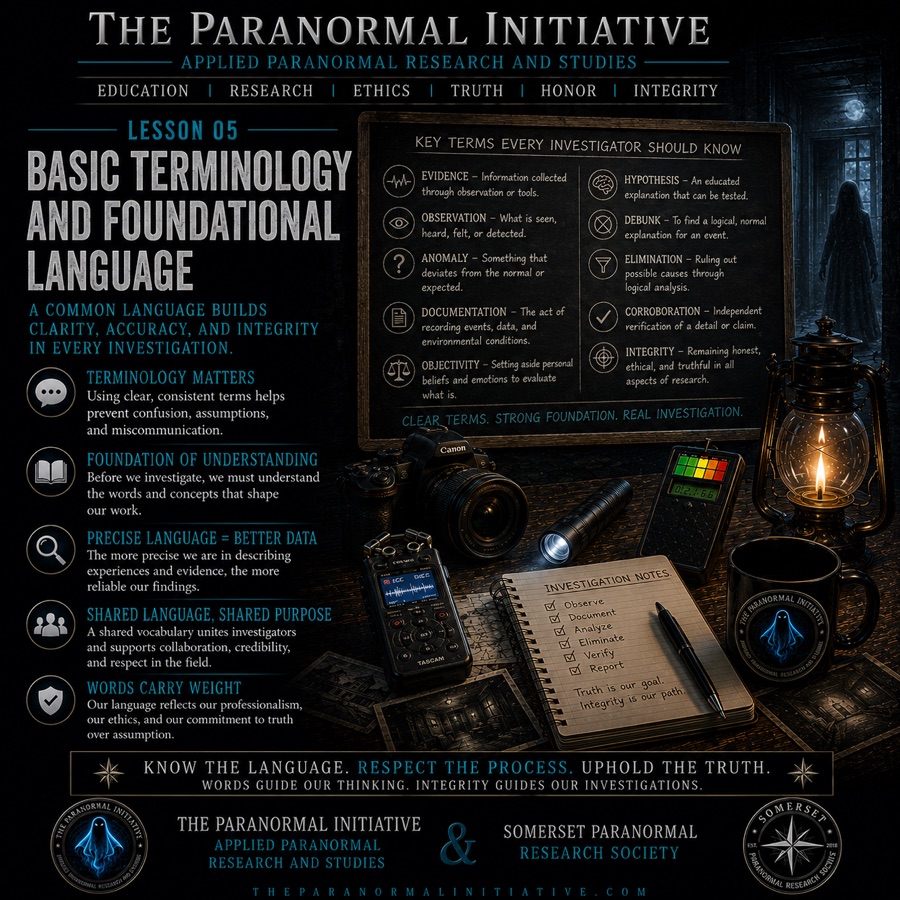 05
05
This lesson defines core language such as claim, witness, haunting, anomaly, evidence, debunking, unexplained, residual, intelligent, environmental factor, baseline, contamination, and conclusion.
Open Lesson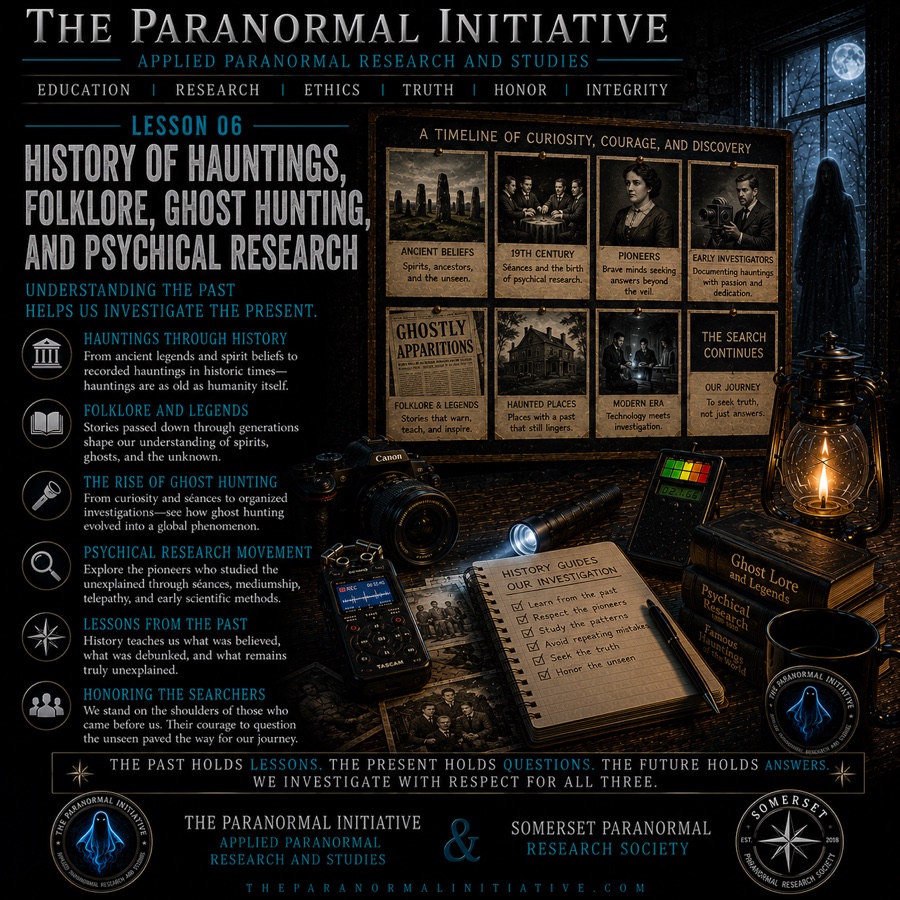 06
06
This lesson introduces the long history behind ghost stories, folklore, spiritualism, early psychical research, modern ghost hunting, and contemporary investigation culture.
Open Lesson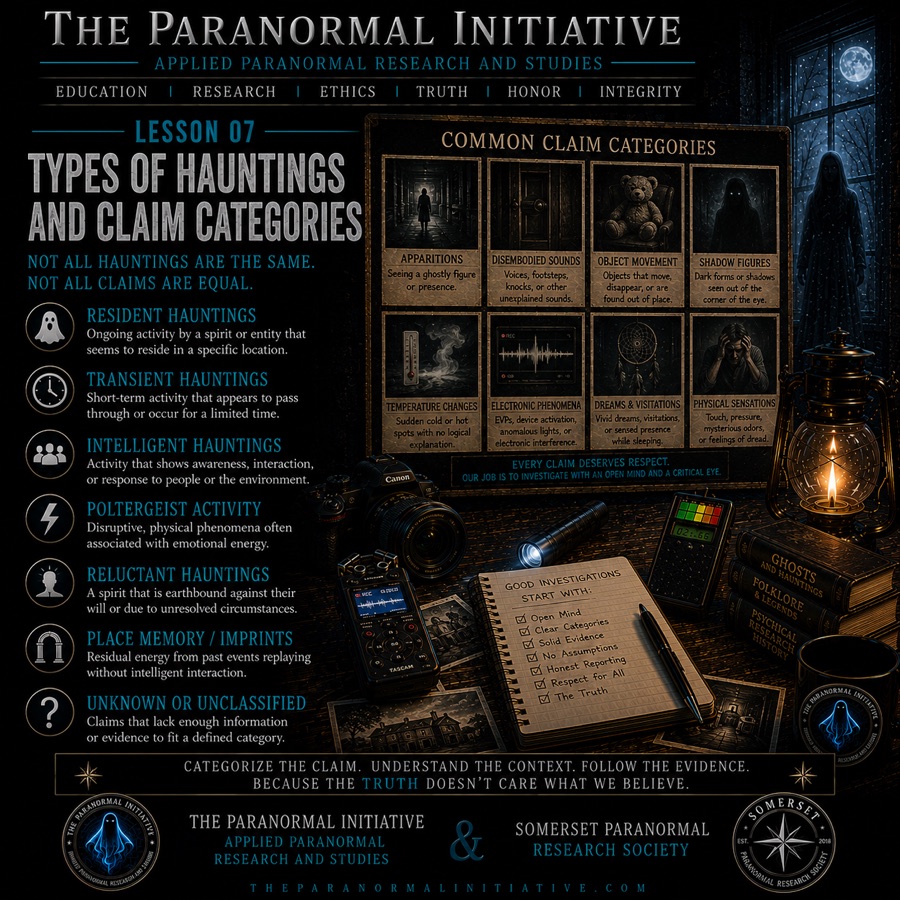 07
07
This major lesson introduces haunting labels as working categories rather than verdicts. Students learn residual patterns, responsive or intelligent claims, poltergeist-style disturbances, shadow reports, apparition reports, object movement claims, auditory claims, environmental anomalies, and location-based legends.
Open Lesson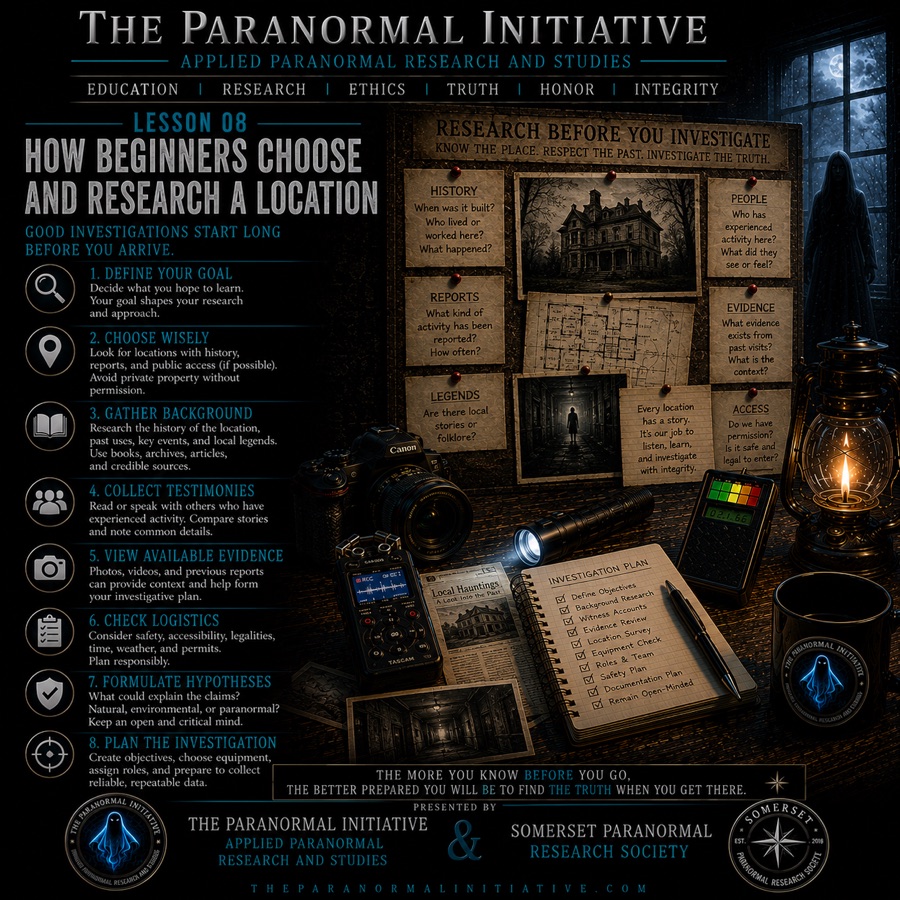 08
08
This lesson teaches beginners how to choose a location responsibly, get permission, start with public history, and avoid turning rumor into fact.
Open Lesson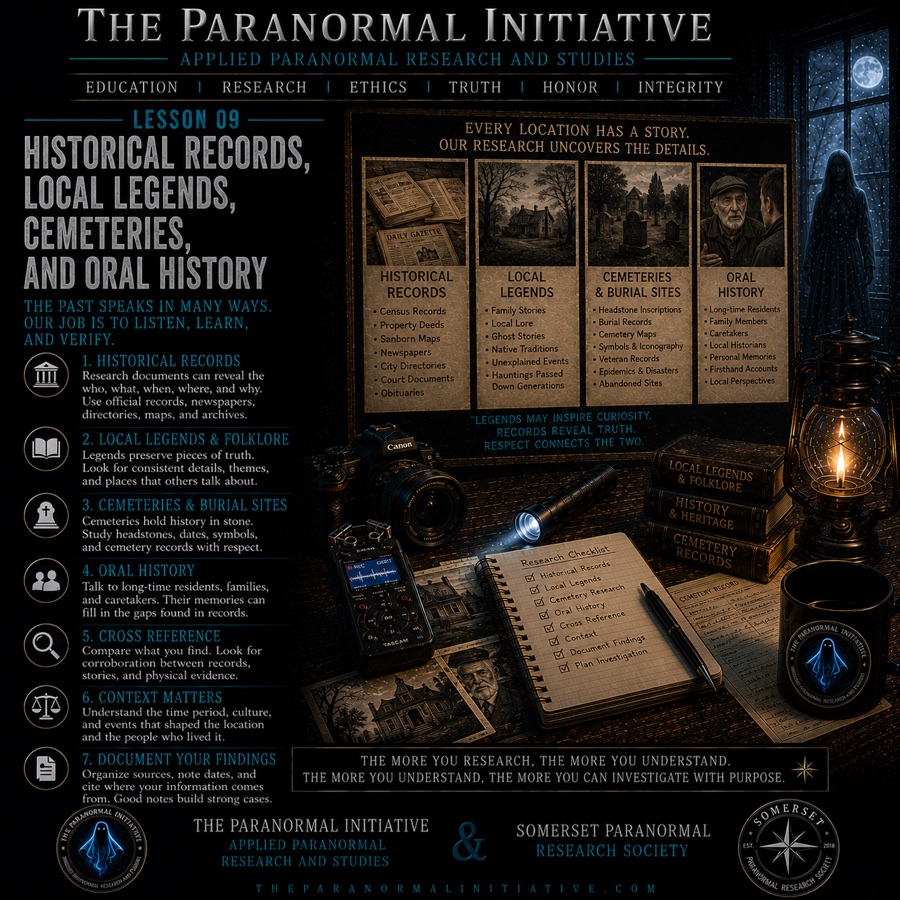 09
09
This lesson teaches how to use records, cemeteries, old newspapers, historical societies, maps, deeds, directories, and oral accounts while separating documented history from legend.
Open Lesson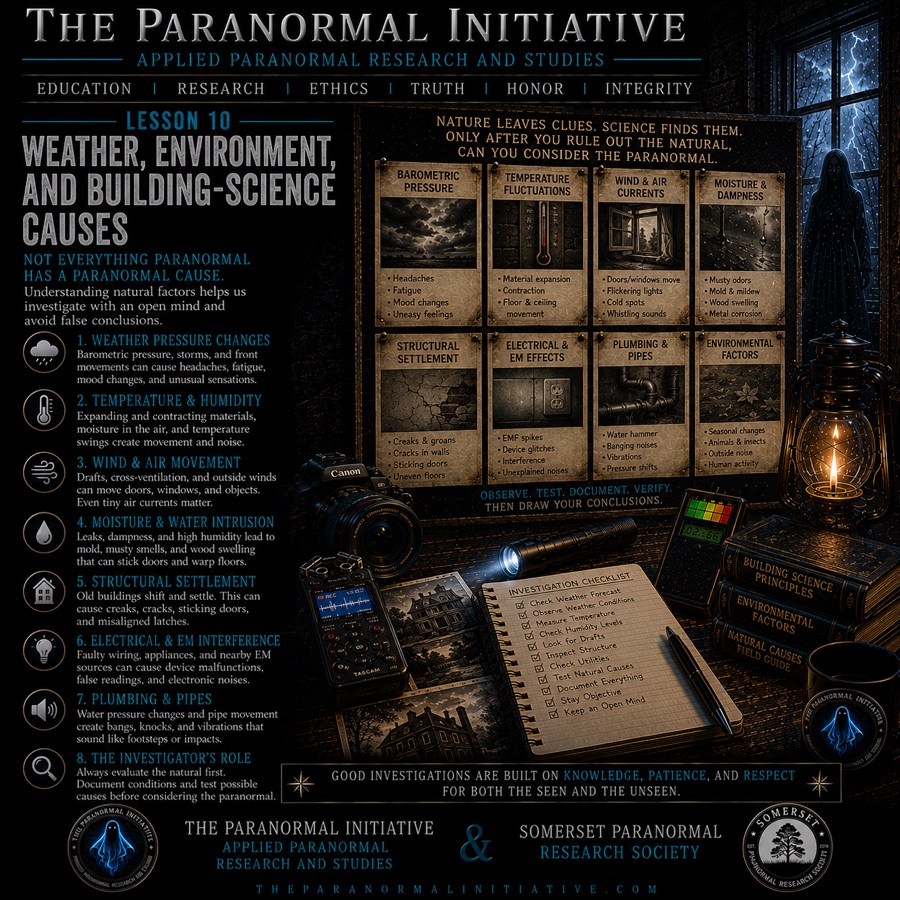 10
10
This lesson introduces natural causes that can mimic haunting claims: weather changes, humidity, barometric pressure, thermal expansion, HVAC, plumbing, foundations, airflow, electrical fields, pests, and ordinary structure noises.
Open Lesson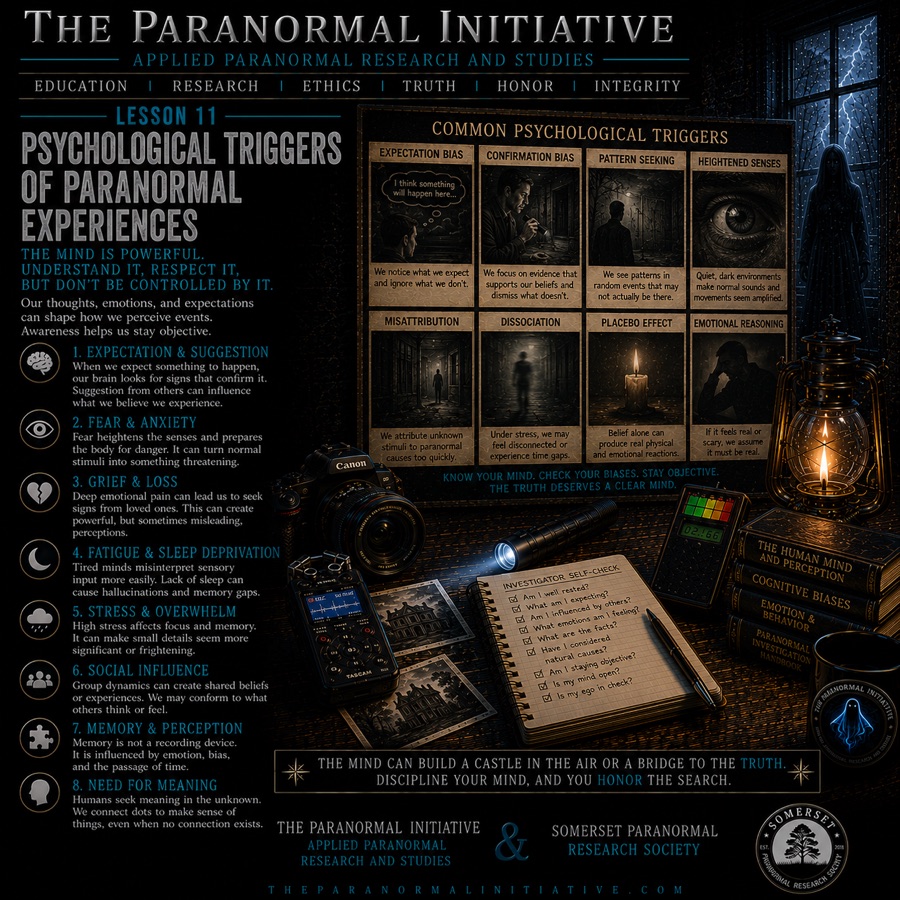 11
11
This lesson introduces fear response, expectation, suggestion, sleep states, grief, stress, pareidolia, memory changes, group reinforcement, and the serious responsibility investigators carry when speaking to residential or business clients about haunting, spirit, entity, or demonic claims.
Open Lesson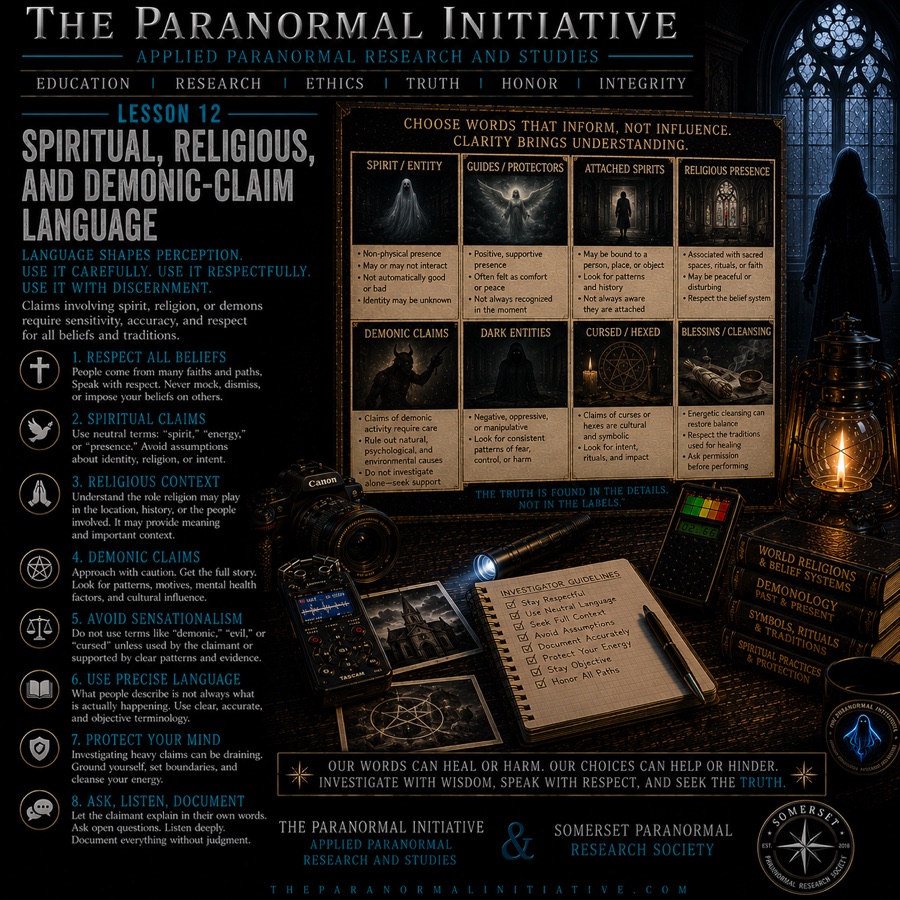 12
12
This lesson teaches students how to approach spiritual or demonic language carefully without ridicule, escalation, or unsupported certainty.
Open Lesson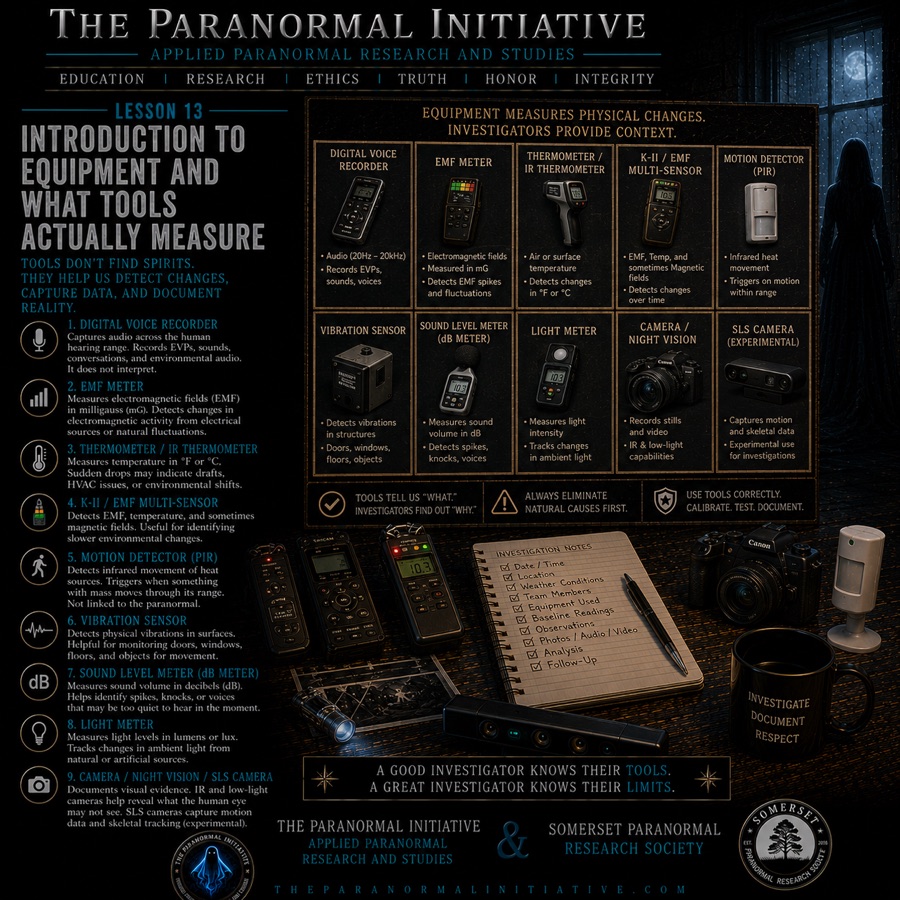 13
13
This lesson teaches that equipment measures physical conditions, not ghosts directly. Students learn what audio recorders, cameras, EMF meters, thermometers, pressure sensors, and motion tools can and cannot tell them.
Open Lesson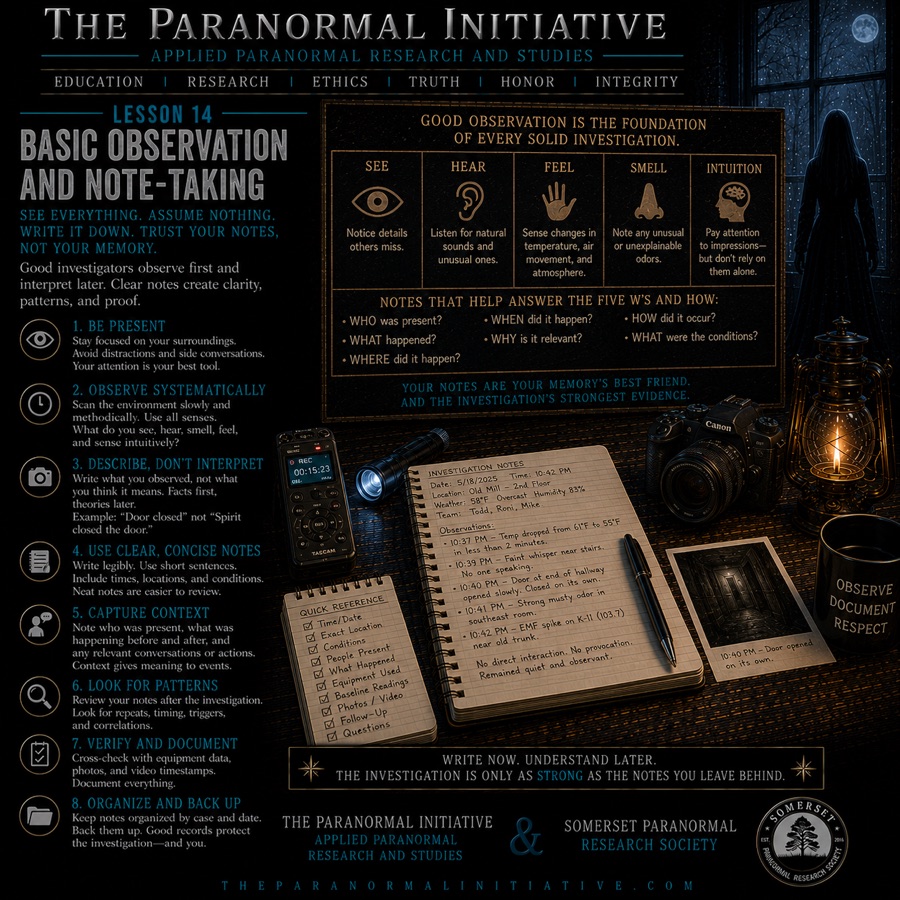 14
14
This lesson teaches students how to observe before interpreting: write down what happened, where, when, who was present, what changed, and what ordinary explanations must be checked.
Open Lesson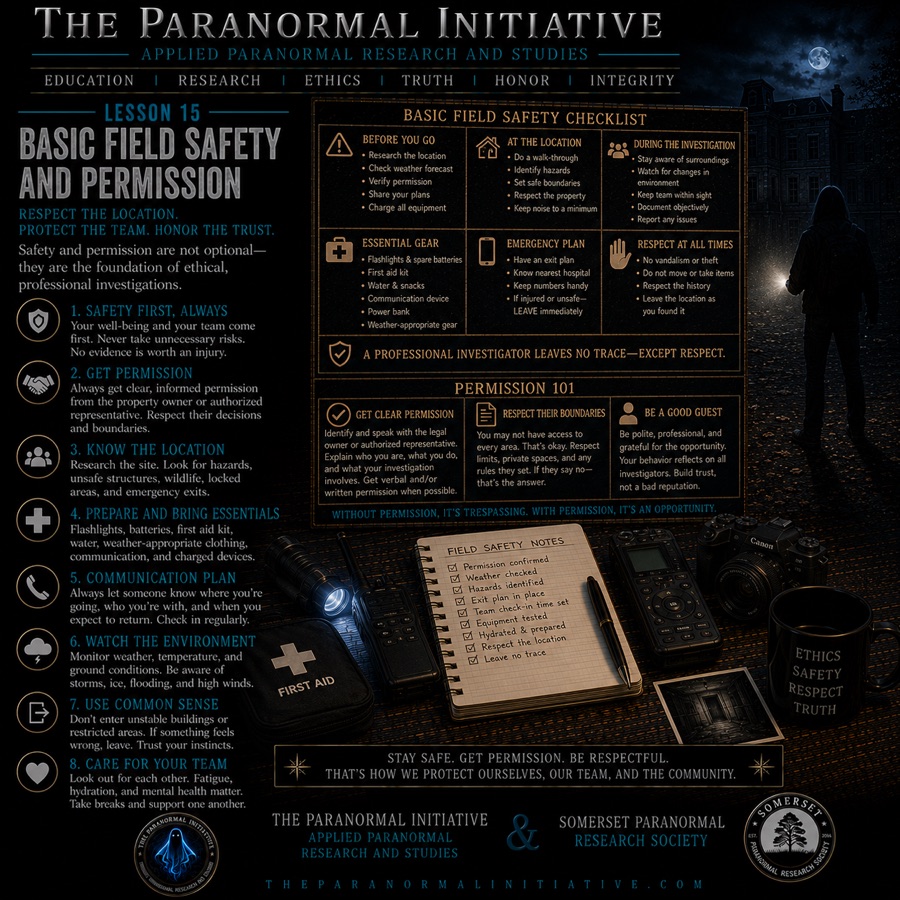 15
15
This lesson covers permission, trespassing, unsafe structures, weather, animals, people, emergency planning, and the importance of never treating risk as part of the thrill.
Open Lesson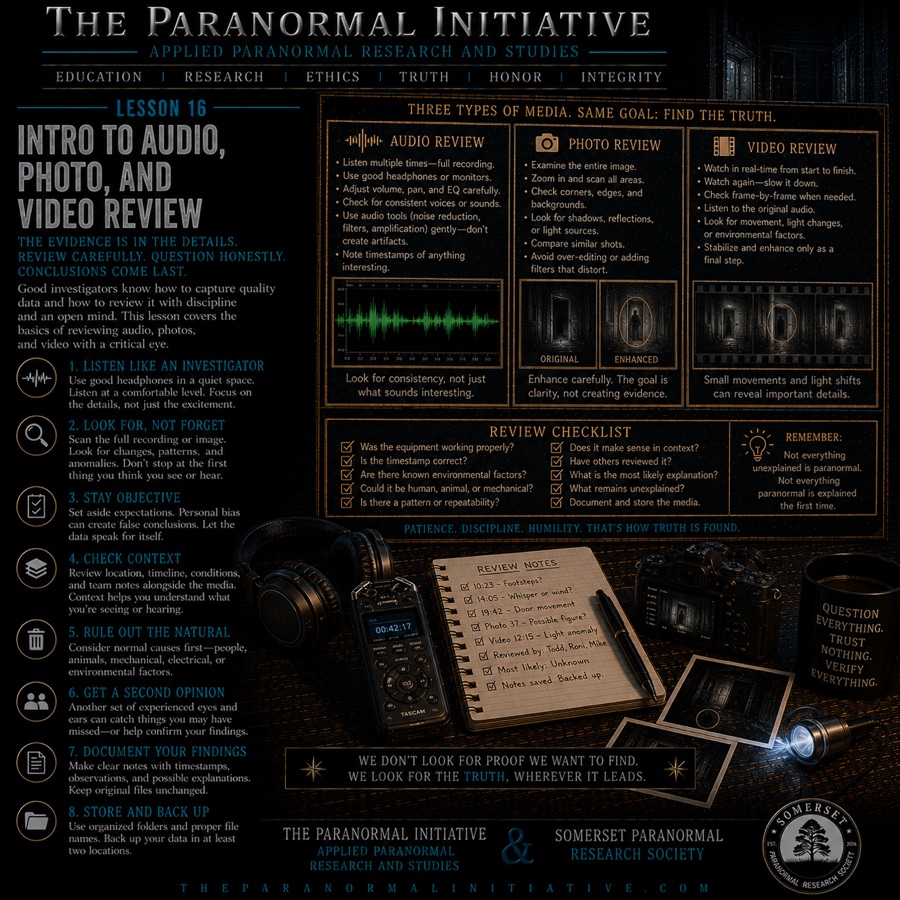 16
16
This lesson introduces beginner review standards for recordings, images, and video. Students learn to avoid jumping to conclusions from noise, compression, blur, reflections, and expectation.
Open Lesson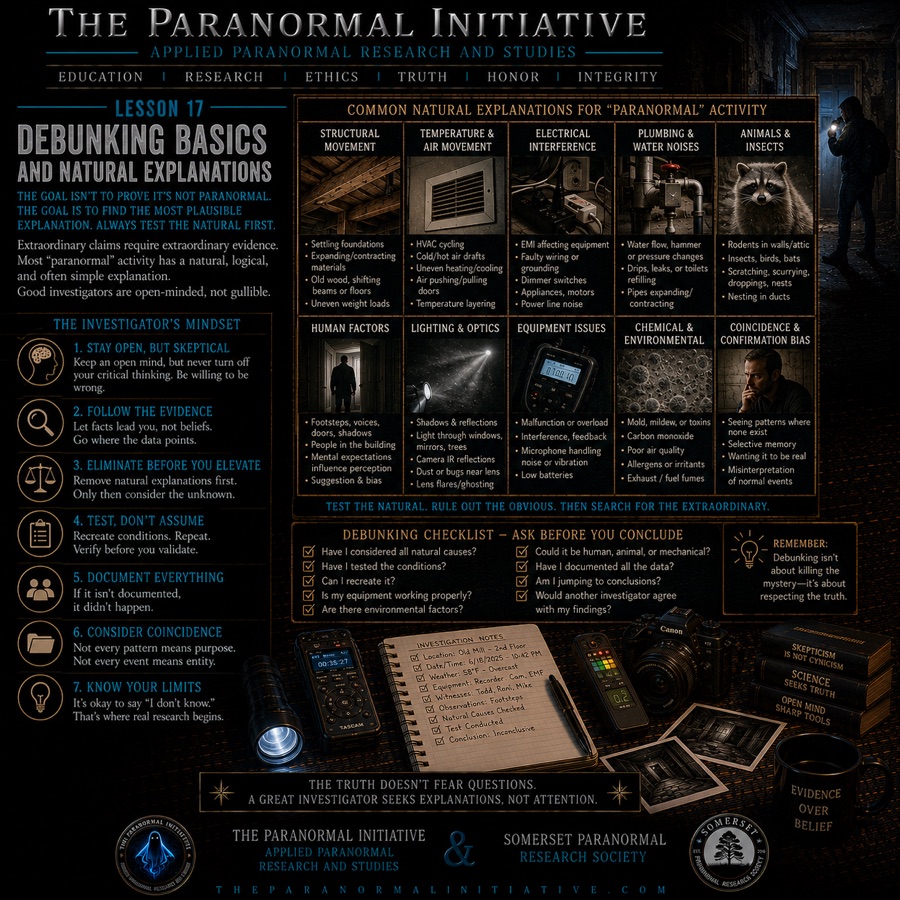 17
17
This lesson reframes debunking as respectful testing. Students learn that eliminating natural explanations protects the case, the witness, and the credibility of the field.
Open Lesson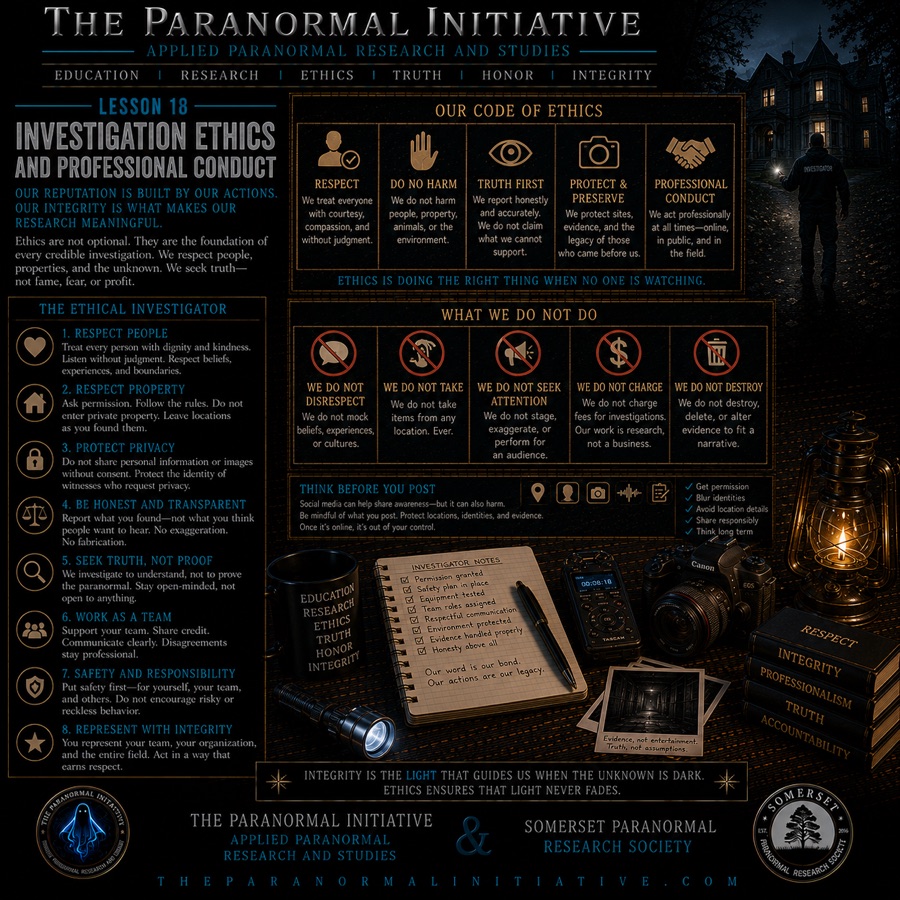 18
18
This lesson teaches students that ethics are one of the most important parts of paranormal investigations. It covers respect for clients, property, history, evidence, teammates, and the public, as well as privacy, confidentiality, honesty, and professional conduct before, during, and after investigations.
Open Lesson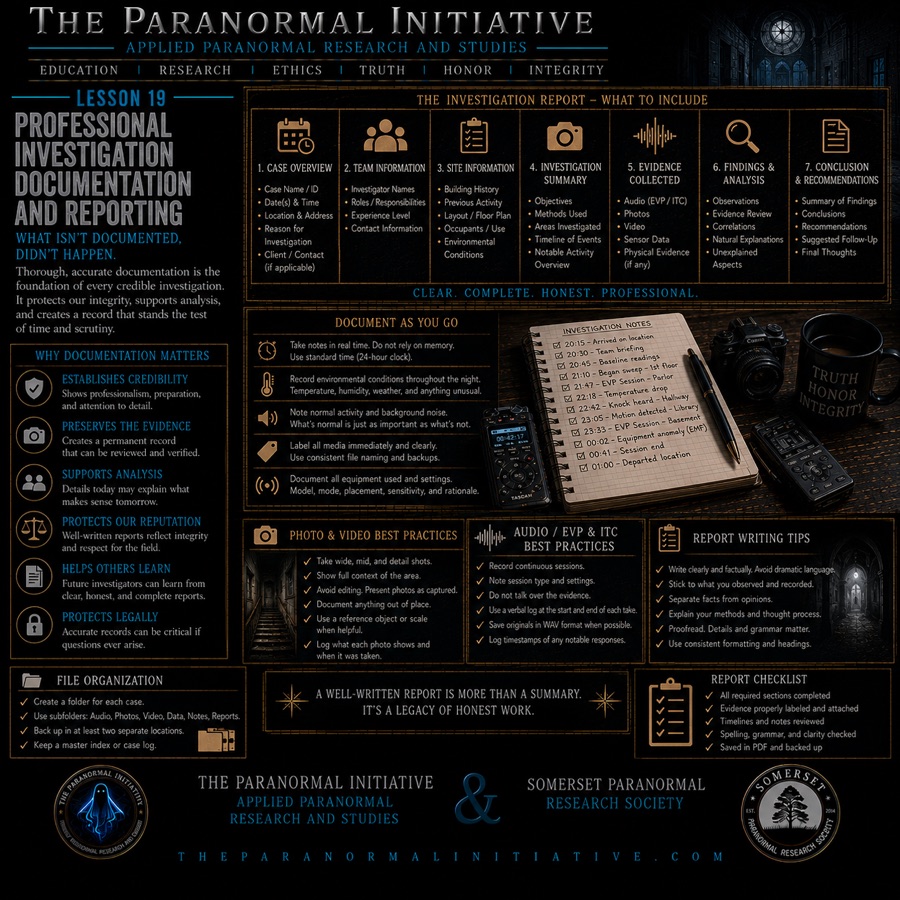 19
19
This lesson teaches students that an investigation is only as valuable as its documentation. Students learn how to create professional reports that allow others to understand exactly what occurred, what was observed, what was tested, and what conclusions were reached. Topics include report structure, objective observations, separating facts from interpretations, proper use of photographs and audio logs, organizing evidence, and building reports that remain credible years later.
Open Lesson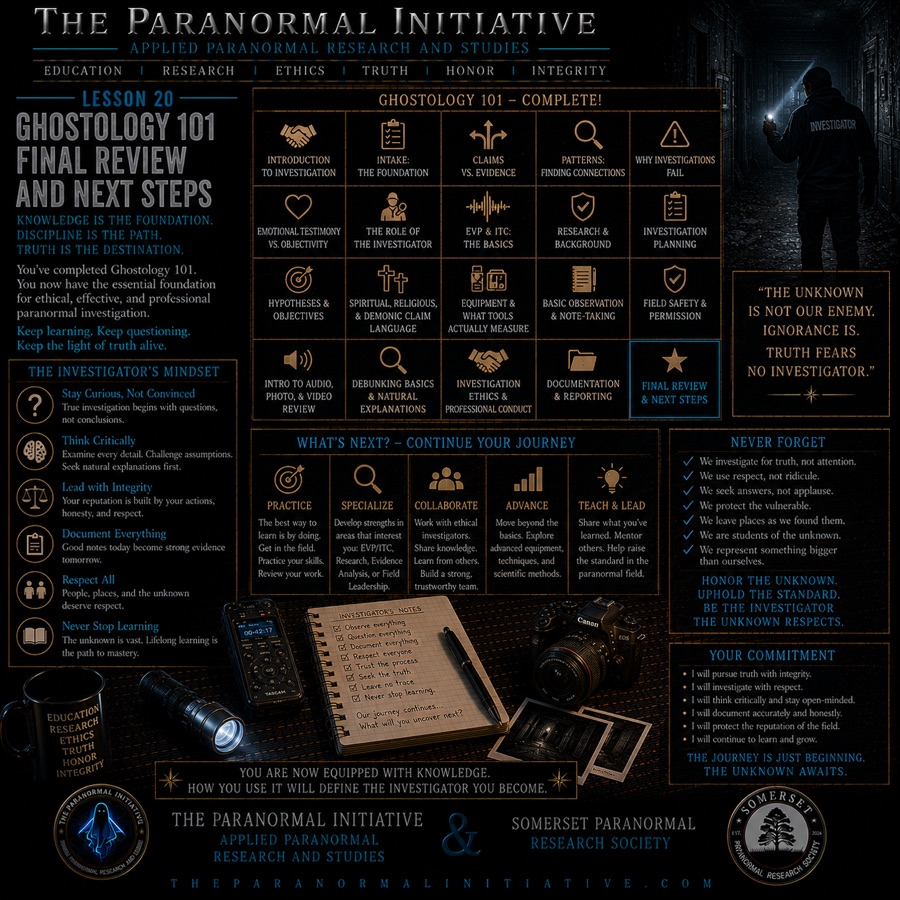 20
20
This final capstone lesson concludes Ghostology 101 by reviewing the full course journey, reinforcing core principles, bringing the course together, celebrating the first step into responsible paranormal study, and preparing students for continued learning through The Paranormal Initiative - Applied Paranormal Research and Studies. Students are invited to reflect, discuss, revisit favorite topics, and choose the next pathway that fits their interest.
Open LessonCore paranormal vocabulary, investigation language, common claims, evidence categories, and responsible use of field terminology.
How ghost traditions, local legends, spiritual beliefs, and investigation practices shaped the modern paranormal field.
Ways people think about hauntings, consciousness, residual activity, intelligent interaction, place memory, and anomalous experience.
Audio, visual, environmental, experiential, historical, and testimonial material, with emphasis on careful interpretation.
Client care, respectful language, uncertainty, personal belief boundaries, site access, and honest communication.
Pathways into investigation methodology, EVP/ITC research, equipment education, repository reading, and field articles.