EVP / ITC Research

What Is ITC Research Really Trying To Accomplish?

A reflection on the difference between devices that produce familiar words and experiments designed to ask better questions about source material, structure, and communication.

Series Index EVP / ITC Research
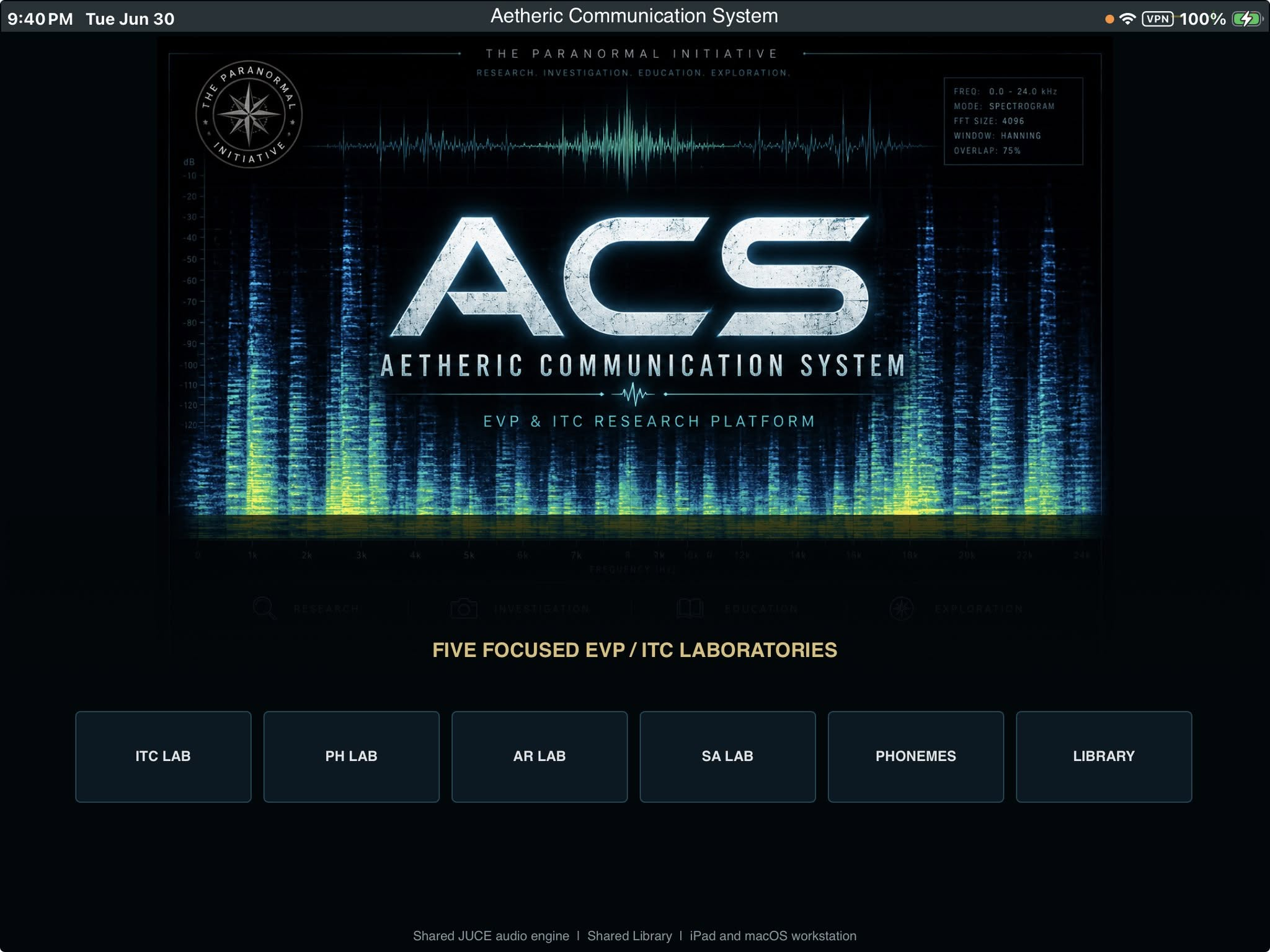
Aetheric Communication System EVP and ITC research platform graphic

The Responsibility To Understand The Tools

One of the reasons I became passionate about EVP and ITC research is because I believe there is still so much we do not understand.

But that also means we have a responsibility to understand the tools we use.

Lately, I have noticed more and more devices being marketed as real ITC devices or spirit communication systems. Many rely on word banks, predefined phrases, or random word generators.

My question is not whether people enjoy using them. It is whether they actually represent the goals of ITC research.

To me, they do not.

Preloaded Words Are Not The Same As Research

The purpose of Instrumental Transcommunication has never been to have a device randomly produce recognizable words from a preloaded dictionary.

If a system already contains thousands of complete words, names, and phrases, then every response already exists before the experiment even begins.

When a word happens to coincide with a question, it can feel incredibly meaningful.

But coincidence alone is not evidence of intentional communication.

A Different Research Question

From a research perspective, the real question is this: can something external manipulate source material that contains no predefined language and organize it into something meaningful?

That is a very different experiment.

Instead of providing complete words, why not provide only the raw building blocks of speech?

Why not use phonemes and allophones?

Why not remove as much structured language as possible and see whether intelligible communication can emerge from sounds that were never intended to form words in the first place?

Why ACS Was Created

That question has fascinated me for years.

It is also one of the primary reasons ACS, the Aetheric Communication System, was created.

ACS was never designed to tell people they were talking to spirits.

It was designed to provide a cleaner experimental environment for EVP and ITC research. A place where source material could be better understood. A place where structured language was intentionally reduced rather than expanded.

Results Worth Studying

The goal of research is not to make communication easier to believe.

The goal is to create experiments that produce results worth studying.

That takes time. It takes patience. It takes countless hours of development, testing, failure, redesign, and asking difficult questions.

Real research is rarely flashy. It does not always produce immediate answers. But every improvement in methodology brings us one step closer to understanding what may, or may not, be happening.

Who Is The Audience?

Sometimes I find myself asking a difficult question.

If the majority of people simply want a device that produces complete words and phrases so they can immediately conclude they are communicating with ghosts or spirits, then who am I building a real EVP and ITC research platform for?

Who is the audience for a system that asks questions instead of providing instant answers?

Who wants to spend hours experimenting with phonemes and allophones instead of receiving predefined responses?

The People Who Push The Field Forward

The answer, I hope, is the people who are genuinely interested in research.

The people who understand that meaningful discovery rarely comes from taking the easiest path.

It comes from asking better questions, challenging assumptions, and building experiments that help us learn something new.

Perhaps that audience is smaller. But if even a handful of researchers are willing to push the field forward rather than simply reinforce what they already believe, then every hour spent building ACS has been worthwhile.

Better Experiments, Not Easier Answers

Whether ITC ultimately proves successful or not, I believe the field deserves tools that encourage better experimentation, greater transparency, and thoughtful discussion.

Research should move the field forward, not simply create the appearance of communication.

The paranormal community does not need more devices that tell us what we want to hear.

It needs better experiments. It needs better methodology. It needs researchers who are willing to ask difficult questions instead of settling for easy answers.

That is the difference between building something to support investigation and building something simply to create the next interesting response.

Understanding The Tools Back to Series ACS Phonetic Data