Lesson Purpose
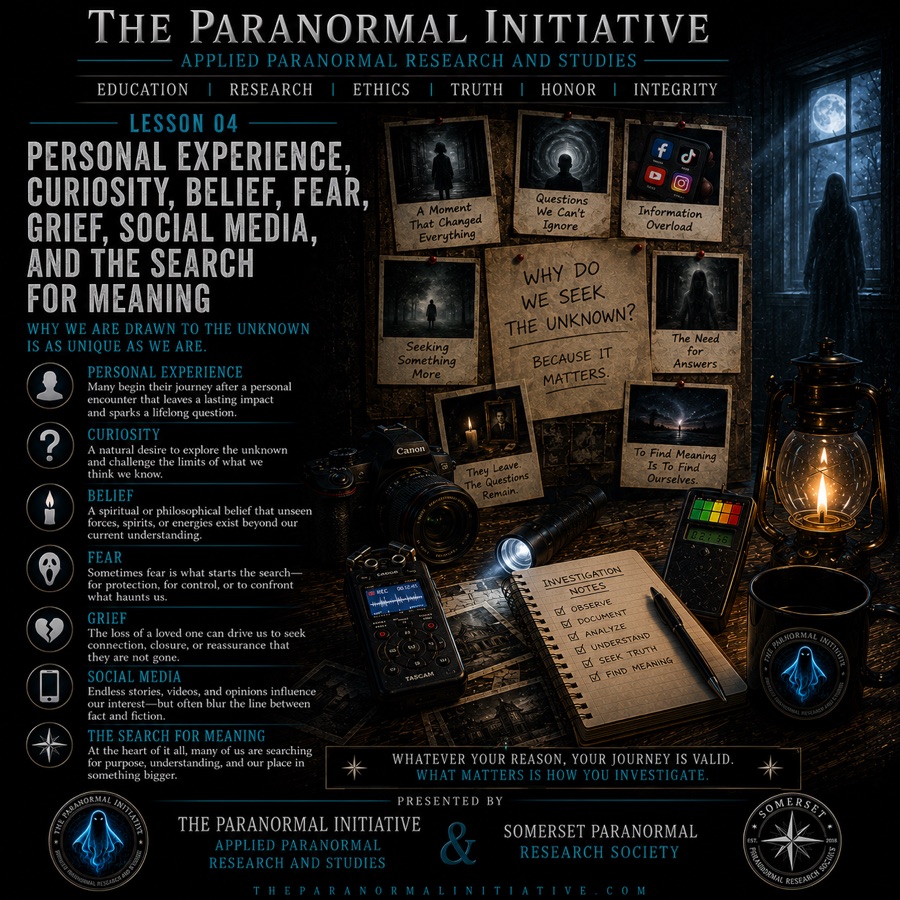
This lesson explores the human side of paranormal investigation. Every investigation begins with people — their experiences, their emotions, their beliefs, their fears, and their stories. Before there is evidence, there is usually someone's account of something strange. Understanding why people report what they do, and how their personal context shapes those reports, is essential for any investigator. This lesson is not about determining whether experiences are real or imagined. It is about understanding the people behind the reports and approaching every case with empathy, professionalism, and critical thinking.
Lessons 1 through 3 asked students to examine motive, understand ghost hunting, and define paranormal investigation as a disciplined process. Lesson 4 brings those ideas into human reality. People do not report strange experiences as empty data points. They report them through fear, memory, grief, religious belief, curiosity, family history, social influence, and the need to make sense of something that unsettled them. A responsible investigator must understand that human context without turning it into either an excuse to dismiss people or a reason to believe every interpretation.
The purpose of this chapter is to teach a central Ghostology 101 standard: respect the experience, but investigate the interpretation. A person may be sincere, frightened, grieving, curious, or convinced. That deserves care. The investigator's job is to document what was reported, ask careful questions, avoid leading language, and separate meaning from evidence. This is one of the most important beginner lessons because every future case will involve people before it involves equipment.