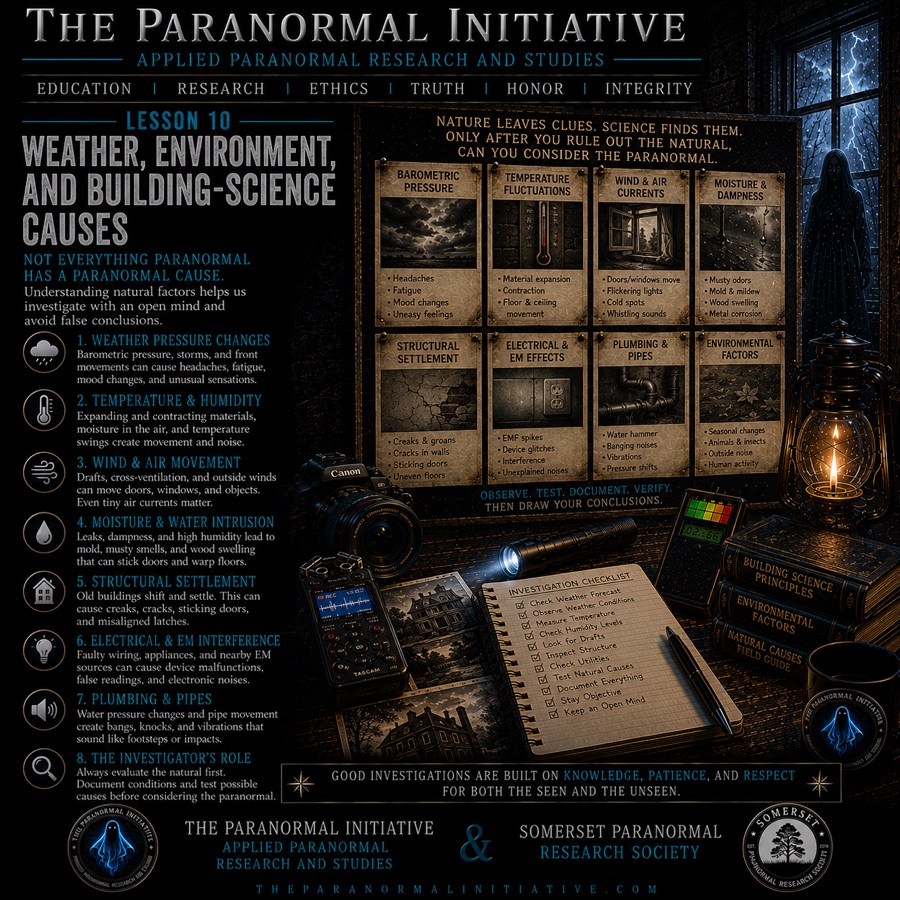
Weather affects both the physical environment and the people within it. Understanding how weather influences investigations is essential for distinguishing between natural phenomena and genuinely unexplained events.
Storms. Thunderstorms, hurricanes, and other severe weather events can create dramatic changes in atmospheric pressure, temperature, and electromagnetic conditions. Lightning strikes can cause power surges that make lights flicker or appliances behave strangely. The pressure changes associated with storms can cause doors to stick or move, windows to rattle, and structural materials to creak and groan. People often report increased paranormal activity during storms, but the environmental changes alone may explain many of these reports.
Wind. Wind is one of the most common sources of false positives in paranormal investigation. It can create whistling sounds through gaps in windows and doors. It can cause trees to scrape against buildings, producing sounds that are easily mistaken for footsteps or knocking. It can create pressure changes that make doors open or close on their own. It can carry sounds from distant sources, making them seem to come from within the building. A windy night can produce an astonishing range of sounds that an inexperienced investigator might interpret as paranormal.
Rain. Rain creates its own soundscape. Dripping, pattering, and rushing water can be mistaken for footsteps, whispers, or other paranormal sounds. Rain can also affect a building's behavior: water can seep through cracks, cause materials to swell, and create dampness that affects temperature and humidity readings. Heavy rain can also mask other sounds, making it difficult to identify the true source of an anomaly.
Moisture and door movement. Wet weather and high humidity can change how doors fit in their frames. Wood can swell during damp conditions and contract as the air dries, shifting the relationship between the door, the hinges, the latch, and the strike plate. A door that appears secure may open or close unexpectedly if the latch is barely seated and moisture-related movement lets it slip free. When a door opens or closes by itself during or after wet weather, investigators should check humidity, swelling, contraction, latch depth, hinge tension, drafts, and pressure changes before considering a paranormal explanation.
Snow and ice. Snow and ice create unique environmental conditions. Snow absorbs sound, making locations unusually quiet. Ice can cause branches to break, creating sudden loud sounds. The weight of snow can cause structural materials to shift and creak. Melting snow can create dripping sounds that persist long after the precipitation has stopped. Temperature inversions associated with snow cover can affect how sound travels, making distant noises seem closer than they are.
Fog. Fog affects visibility and can create visual anomalies. It diffuses light, creating unusual glows and shadows. It can make familiar landscapes look strange and unfamiliar. Fog also affects sound transmission, sometimes making sounds seem muffled and other times carrying sounds from surprising distances. The atmospheric conditions that create fog are often associated with changes in barometric pressure, which can affect people's mood and perception.
Heat. Extreme heat can affect both buildings and people. High temperatures cause materials to expand, creating creaks, pops, and groans. Heat can also cause people to become dehydrated, fatigued, and more susceptible to suggestion and misperception. Heat waves can create mirage effects that distort visual perception. Electrical systems can behave unpredictably in extreme heat, causing lights to flicker or appliances to malfunction.
Cold. Cold temperatures cause materials to contract, creating sounds that are often mistaken for paranormal activity. Cold can also affect equipment performance: batteries drain faster, electronics behave unpredictably, and recording devices may produce unusual artifacts. People in cold environments may experience physical sensations — shivering, goosebumps, a feeling of pressure — that they interpret as paranormal presence.
Seasonal changes. Different seasons bring different environmental conditions. Spring brings thawing, melting, and increased moisture. Summer brings heat, humidity, and increased insect and animal activity. Fall brings cooling, falling leaves, and changes in wildlife behavior. Winter brings cold, snow, ice, and reduced ambient noise. Each season creates its own set of environmental factors that investigators must consider.