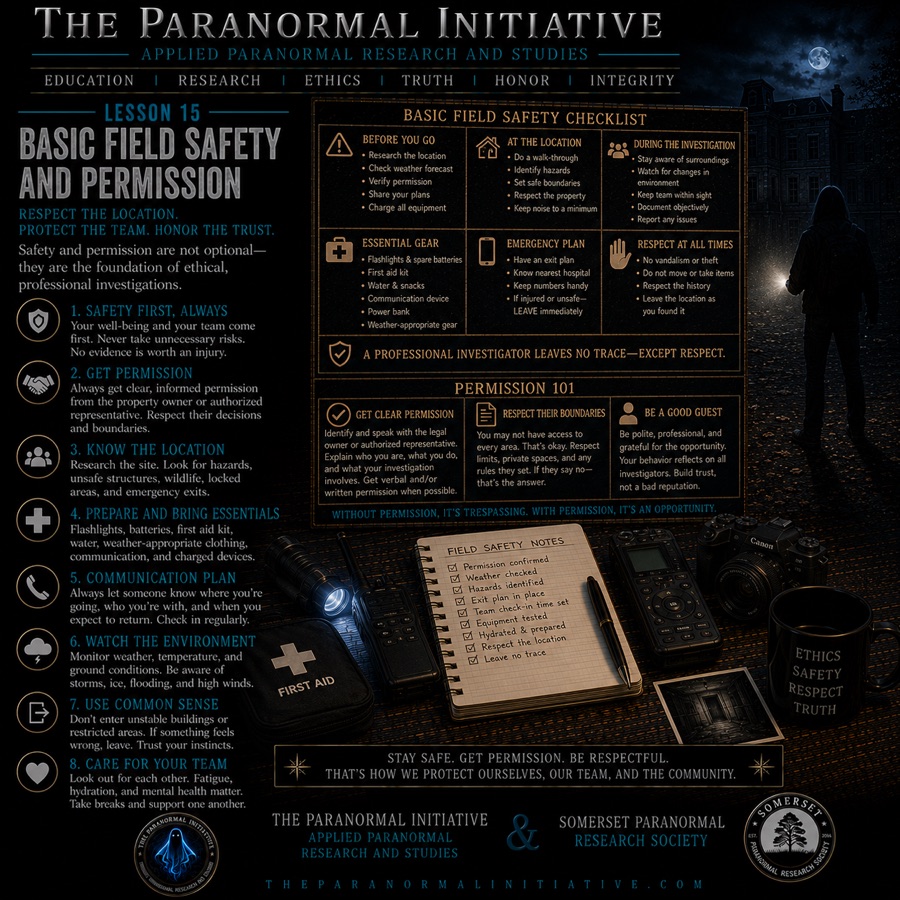
Residential and business investigations require additional care because people live, work, sleep, raise children, store private information, and maintain reputations in those spaces. Permission is not only about entering a building. It is about understanding the boundaries of access, privacy, recording, discussion, publication, and follow-up. The formal agreements introduced in this lesson help document those boundaries.
All affected adults should know. In a residence, one person's invitation may not be enough ethically, even if that person owns the home. Spouses, partners, adult roommates, adult children, renters, and caretakers may be affected by the investigation. At minimum, the team should ask who lives in the home, who will be present, who has been informed, and whether any areas are private or off-limits. Investigators should never knowingly participate in a secret investigation that would create conflict or distress if another household member discovered it.
Children and vulnerable people require special caution. If children, elderly family members, disabled residents, or emotionally distressed people are involved, the team must be careful about language, recording, interviews, and conclusions. Children should not be frightened, coached, or asked leading paranormal questions. Vulnerable residents should not be made to feel that they are in danger from spirits, demons, curses, or forces the team cannot prove. Safety includes emotional safety.
Private spaces stay private unless permission is specific. Bedrooms, bathrooms, offices, medical spaces, closets, financial paperwork, computers, religious areas, children's rooms, and personal storage areas should not be entered or recorded casually. If access is necessary, it should be specifically approved and documented. A general invitation to investigate a home is not the same as permission to film every drawer, document, bedroom, or private object.
Business cases affect employees and customers. A business owner may want an investigation, but employees may not want to be recorded, named, or associated with paranormal claims. Customers may be present before or after business hours. Security systems, cash drawers, private offices, employee files, and customer records must be protected. The team should clarify operating hours, employee awareness, camera restrictions, publication rules, parking, alarms, and who may speak publicly about the case.
Media permission is separate. Permission to investigate does not automatically mean permission to publish photos, audio, video, location names, client names, or dramatic summaries. Media consent should be specific. A client may allow recordings for private analysis but not public release. They may allow anonymized examples for education but not social media clips. They may want to review any material before publication. These boundaries should be honored exactly.
Evidence use is separate from evidence collection. A team may collect audio, video, photographs, environmental logs, witness statements, and notes during a case. That does not automatically give the team the right to use those materials anywhere they wish. Evidence use consent should identify whether material may be used for internal review, client report, training, public presentation, marketing, research, archives, or future course examples. If the consent is unclear, do not publish.
Storage and retention matter. Case material can remain sensitive long after the investigation is over. The Case Capsule Storage Agreement exists because forms, recordings, photographs, reports, and notes can contain private information. Students should understand that saving evidence is not merely a technical act. It is an ethical responsibility. Who can access the files? Where are they stored? Are they backed up? How long are they retained? Can the client request deletion or restriction? These questions belong in professional workflow.
Residential and business boundaries are ultimately about trust. People are allowing investigators into spaces that matter to them. If the team handles access, privacy, media, evidence, and storage carefully, they protect the client and raise the standard of the field. If they treat those boundaries casually, they can cause harm even if the investigation itself seems exciting.