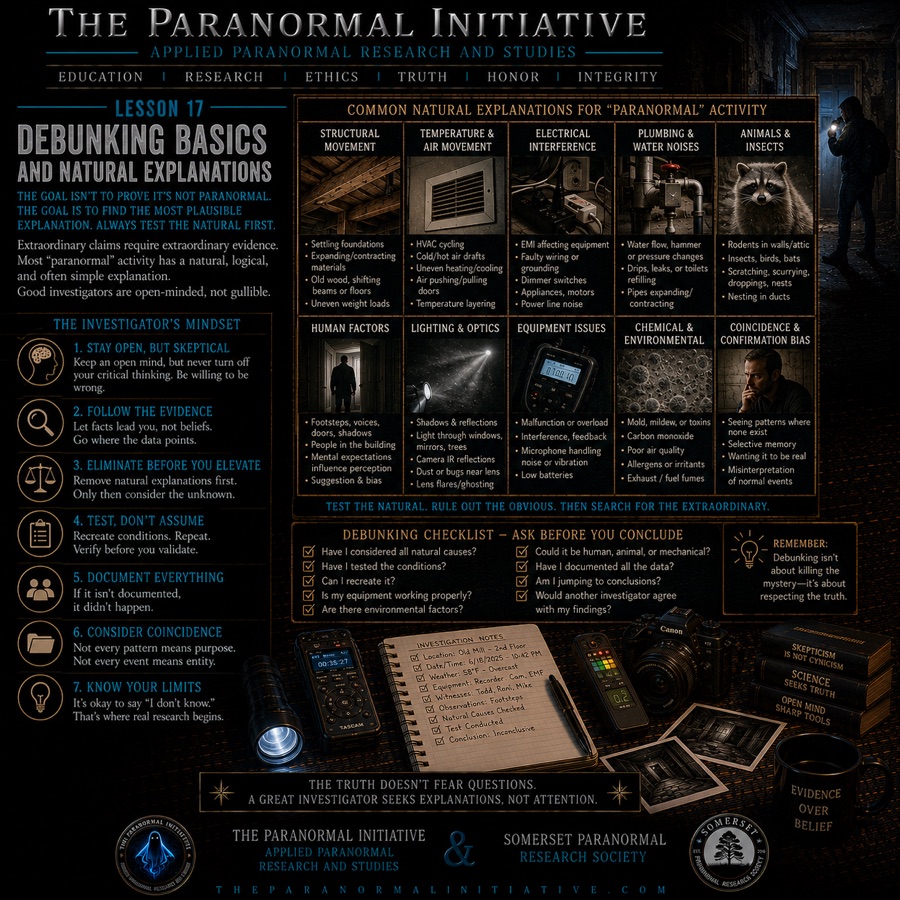
Some of the strongest natural explanations are ordinary household and building conditions that beginners overlook because they do not feel dramatic. Dust, filters, pests, plumbing, and electrical systems can create a surprising number of reports: orbs, streaks, scratching, tapping, footsteps, voices, smells, lights, EMF readings, cold spots, and uneasy feelings. A professional investigator treats these conditions as part of the case, not as an afterthought.
Dust and particulates. Dust is not one substance. It may include skin cells, pet dander, pollen, fibers, plaster, drywall, insulation, soot, ash, carpet debris, insect fragments, mold spores, and outdoor material tracked inside. When flash, infrared, or strong side lighting catches particles close to a lens, they may appear as orbs, streaks, rods, mist, or moving lights. Dust may increase after people walk through a room, open an attic hatch, move stored boxes, adjust curtains, run HVAC, or step on old carpet. If an image shows orbs, the investigator should check the room, not just the photo.
Filters and ventilation clues. HVAC filters, return vents, supply vents, bathroom fans, dryer vents, kitchen exhaust, and ceiling fans all move air and material. A dirty filter can explain dust circulation. A blocked vent can create uneven room temperature. A loose vent cover can rattle. A return can pull doors inward. A ceiling fan can move curtains, web strands, and particles. Ventilation should be documented in the same practical way as EMF or temperature readings: where are the vents, what direction is air moving, when does the system cycle, and what does the filter condition suggest?
Pests and small animals. Scratching in walls, thumps in attics, tapping sounds, dragging noises, rustling insulation, movement in ceilings, and strange vocalizations often come from animals. Mice, rats, squirrels, birds, bats, insects, and other wildlife can enter small gaps and move through spaces people cannot see. Animals may be more active at night, which makes the timing feel paranormal. They may also respond to weather, breeding seasons, food sources, and nesting patterns. Look for droppings, chewed material, nesting, entry holes, stains, odors, tracks, damaged insulation, and repeated activity in the same wall or ceiling area.
Plumbing. Plumbing systems can knock, hiss, drip, gurgle, rush, vibrate, and echo. Water hammer can create loud knocks when valves close quickly. Pipes expand and contract with hot water. Drains can gurgle. Toilets can run intermittently. Sump pumps can start unexpectedly. Water softeners, boilers, radiators, and well pumps can produce sounds on schedules. A pipe sound may travel through walls and appear to come from a different room. Investigators should ask about bathrooms, laundry, dishwashers, water heaters, sump pumps, irrigation systems, and recent plumbing work.
Electrical systems. Electrical sources can produce buzzing, flickering lights, EMF readings, device interference, and unusual sounds. Loose bulbs, aging switches, dimmers, old wiring, transformers, chargers, routers, breaker panels, refrigerators, microwaves, televisions, power strips, and nearby service lines can all affect equipment or perception. An EMF reading near a wall is not meaningful until wiring, outlets, appliances, and adjacent rooms have been checked. Flickering lights should be treated as a possible safety issue, not as communication, until qualified inspection rules out wiring problems.
Document what was checked. A good debunking note does not simply say "checked natural causes." It lists the actual checks: HVAC filter visually inspected, vents mapped, thermostat cycle noted, attic not entered due to safety, exterior branches observed near bedroom wall, breaker panel measured, pet activity confirmed, plumbing schedule unknown, weather logged, and follow-up recommended. Specific notes show real work. Vague notes create weak conclusions.